
Storm Response Planning
Smarter staffing for severe weather
When severe weather threatens operations, emergency response leaders are responsible for getting the right number of people, equipment, and resources in place before conditions deteriorate.
Utilities schedule their restoration crews. Oil and gas operators prepare personnel, facilities, and field response teams. The challenge is the same: making high-consequence staffing decisions before the storm arrives.
Customers, regulators, employees, and executive leadership expect organizations to respond quickly, safely, and efficiently. Yet emergency operations leaders are often making these million-dollar staffing decisions with limited analytical support.
Increasingly volatile weather, rising operational costs, and higher reliability expectations demand a more analytical approach to emergency planning. Organizations need a solution that transforms weather, operational, and historical event data into actionable staffing recommendations, helping emergency response teams prepare with greater confidence.
The costs of getting storm response wrong
Imprecise storm response leads to higher costs and worse reputations with customers and regulators.
Under-responding
- Requires expensive last-minute staffing and contractor mobilization
- Increases restoration or operational recovery costs
- Extends outages or operational disruptions
- Creates safety risks for employees and the public
- Reduces customer confidence and regulatory trust
Over-responding
- Leaves personnel and contractors underutilized
- Increases labor and logistics costs
- Reduces confidence in emergency planning
- Makes future cost recovery and budget justification more difficult
Logic20/20 Storm Response Planning
Extreme Weather Forecasting & Response Optimization
Logic20/20 combines weather forecasting, operational data, geospatial analytics, and AI-driven recommendations to help emergency operations teams prepare for severe weather with greater confidence. Decision makers gain a clear view of expected impacts, resource needs, and staffing recommendations days before weather hits
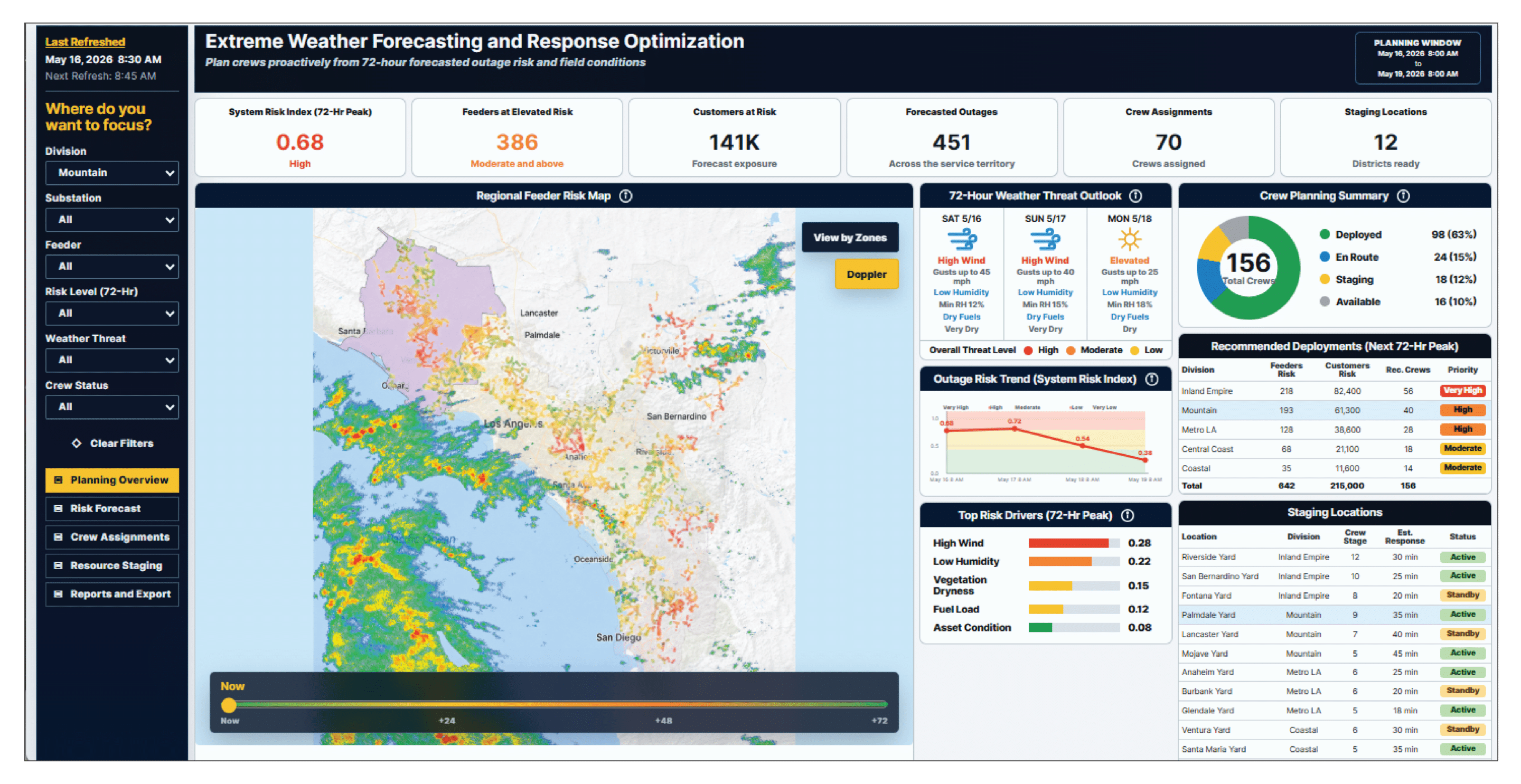
See storms before they arrive
Track projected storm path, severity, and timing up to 5 days in advance, well before typical staffing windows.
GIS-based operational view
Visualize weather impacts across assets, facilities, and service territories with GIS mapping to identify where operations are most at risk.
Staff with confidence
Receive data-driven recommendations for personnel and resource allocation based on projected storm impacts.
Key Capabilities
- Weather forecasting integration
- AI-powered staffing recommendations
- Geospatial impact visualization
- Continuous forecast updates
- Historical storm analysis
- Resource and contractor planning
- Operational dashboards
- Scenario planning
- Executive situational awareness
CUSTOMER STORY
Optimizing storm outage response with predictive modeling
Learn how we helped a large U.S. electric utility optimize storm outage response by reducing prediction error and identifying more than $20 million in projected annual storm-response savings.
What are your challenges? Let's talk through the solutions.