
Advanced Metering Infrastructure: Finding your AMI Solution
Are you ready to manage a grid in transition?
Utilities are under growing pressure to modernize aging infrastructure, meet evolving regulatory expectations, and deliver more responsive, data-driven service. Many providers are contending with:
- Legacy systems that limit grid visibility and scalability
- Increasing demands around cybersecurity and data governance
- Rising expectations for transparency and customer engagement
Many organizations in the utilities industry are seeking solutions to address these challenges and support sustainability goals.
Advanced metering infrastructure (AMI) offers a strategic path forward—supporting real-time insights, more agile grid operations, and stronger customer engagement. Whether utilities are in early planning stages or refining existing systems, the right AMI solution can help them manage a grid in transition—and position the organization for long-term success.
Transforming your metering system with tomorrow’s advanced metering infrastructure
Modern AMI systems integrate smart devices, secure communication networks, and advanced analytics to deliver actionable, real-time insights across the grid. This evolution from AMI 1.0 to AMI 2.0 provides utilities with high-frequency data collection and remote monitoring capabilities—enabling faster issue resolution, predictive maintenance, and data-informed investment planning.
AMI 2.0 delivers a step change in capability through:
Real-time, two-way communication between advanced meters and operations teams for faster diagnostics , remote commands, and greater grid agility
High-frequency data collection, enabled by a fixed network system, allowing precision voltage monitoring, rapid outage detection, and faster restoration
Integration with distributed energy resources (DERs), electric vehicles, and energy storage powering bi-directional flows and advanced load balancing
Deeper operational and customer insights, enabling more targeted investments, predictive maintenance, and tailored customer programs
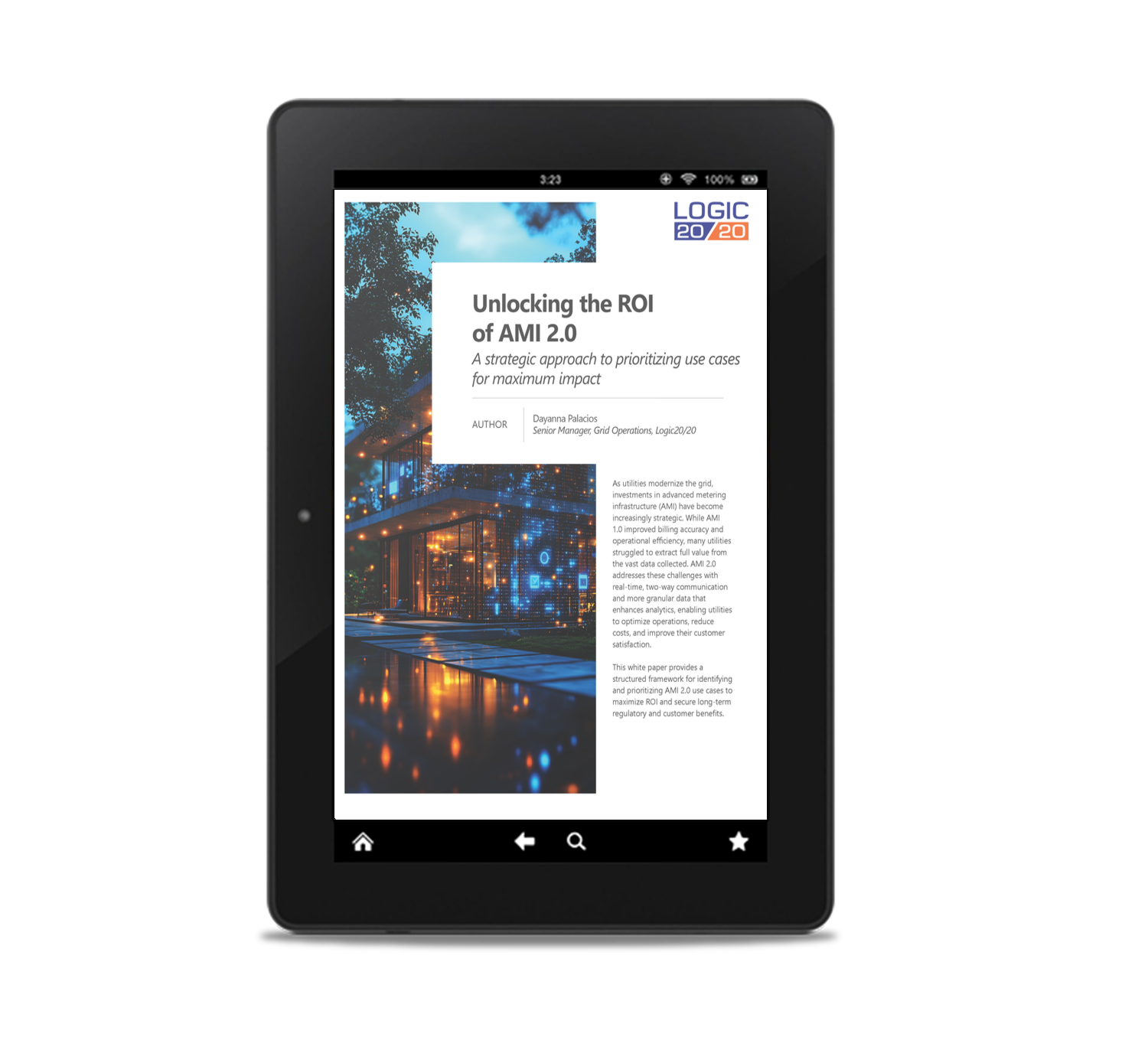
White paper: Unlocking the ROI of AMI 2.0
A strategic approach to prioritizing use cases for maximum impact and aligning AMI investments with regulatory, operational, and financial goals
We will never sell your data. View our privacy policy here.
Taking control of the energy future with the AMI network
An AMI-enabled network supports smarter energy management by enabling:
Faster outage response and restoration
Real-time alerts in AMI systems can detect and manage power outages in real time, pinpointing outages quickly, improving dispatch speed, and reducing downtime.


Enhanced voltage monitoring and power quality
Continuous monitoring ensures voltage stability, detects anomalies, and improves overall grid reliability.
More accurate load forecasting and demand management
Granular data enhances forecasting and supports peak load reduction strategies, enabling utilities to make better-informed decisions about load forecasting and demand management.


Seamless DER and EV integration
AMI enables visibility into two-way energy flows, giving utilities clearer insight into customer-sited DERs such as solar panels, batteries, and EV charging.
Scalable, real-time data visibility
Smart meters collect and stream secure, high-frequency data to back-end systems, unlocking operational insight across the utility.

The result is a more agile, proactive grid built to meet changing customer needs and energy demands.
AMI for boosting customer satisfaction
As customer expectations grow, AMI enables more responsive, transparent, and personalized service by empowering consumers with greater access to their usage data and the ability to make informed choices.
Greater billing confidence
Automated meter reads reduce billing errors and disputes, building trust and improving customer satisfaction.
Usage insights
Customers gain near-real-time visibility into energy usage, empowering them to manage consumption and reduce costs. Through customer portals, consumers have the ability to monitor and manage their usage, identify patterns, and make adjustments for greater efficiency.
Proactive communication
Support for modern programs
Reducing operational costs and strengthening ROI
AMI 2.0 delivers measurable benefits and cost savings for electric utilities by:
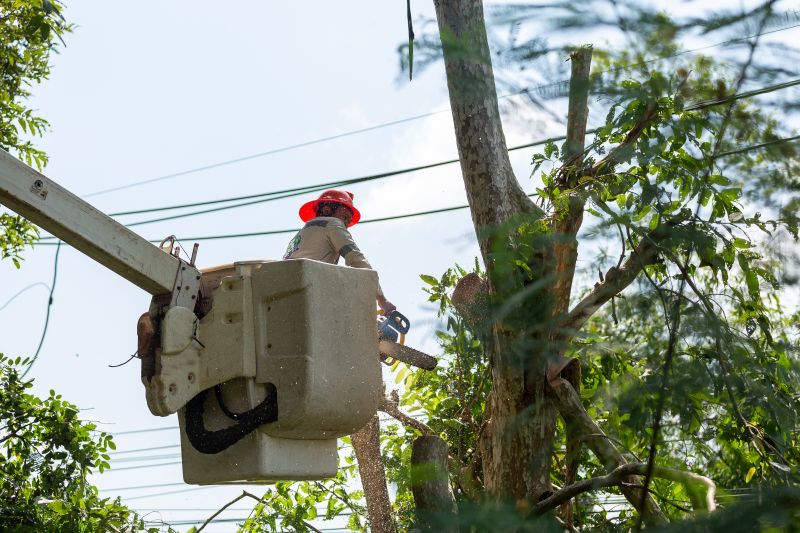
- Eliminating manual processes and reducing truck rolls
- Supporting predictive maintenance and smarter asset deployment
- Improving billing accuracy and reducing customer support costs
- Enhancing field crew efficiency through better diagnostics and planning
- At the same time, high-resolution data supports rate case development, regulatory filings, and investment validation, enabling long-term value realization and regulatory alignment.

Optimizing energy spending with AMI metering
Interval-level data helps utilities:
- Align energy procurement with demand patterns
- Forecast more accurately and reduce peak exposure
- Enable consumer cost-saving programs such as usage alerts and demand response
- Design dynamic rate structures that promote efficient consumption
AMI becomes a tool not just for operations, but for strategic cost management.
Improving reliability and efficiency with a multi-purpose network
A modern AMI system acts as a flexible platform for long-term reliability, grid automation, and operational innovation. Below are key capabilities utilities can activate as part of their AMI investment:
Grid visibility and situational awareness
Advanced metering infrastructure provides real-time insights into system performance, allowing utilities to monitor voltage levels, detect irregularities, and localize disruptions with greater precision. This visibility supports faster response and more stable grid operations.
Load balancing and voltage optimization
By capturing high-resolution usage data across the network, utilities can optimize voltage at the feeder and substation levels, reduce energy waste, and improve overall system efficiency—particularly during peak demand periods.
Support for distributed energy resources
A multi-purpose AMI network enables integration with solar, storage, and EV infrastructure. It provides the intelligence required to manage two-way energy flows and maintain grid stability as DER adoption grows.
Cybersecurity and compliance readiness
Modern AMI networks are designed with built-in protections to meet evolving standards for data privacy, cybersecurity, and regulatory compliance, helping utilities safeguard customer data and critical infrastructure.
Future-ready scalability
As technologies evolve and new use cases emerge, AMI networks can be expanded to support advanced analytics, edge processing, and applications beyond metering, ensuring long-term value and adaptability.

Leveraging AMI data for future-ready infrastructure
AMI data is emerging as a strategic asset for utilities aiming to modernize the grid. With high-frequency insights, utilities can respond to outages faster, forecast load more accurately, and better manage distributed energy resources. Overcoming challenges like data silos and limited integration unlocks new opportunities for efficiency, reliability, and long-term planning across the energy value chain.
Frequently asked questions (FAQs)
What is advanced metering structure (AMI)?
Advanced metering infrastructure (AMI) is a system of smart meters, communication networks, and data platforms that enables two-way communication between utilities and customer meters. The data collected supports real-time grid visibility, enhanced customer service, and data-driven decision making.
What does advanced metering infrastructure do?
AMI collects detailed usage data from smart meters at frequent intervals and transmits that information back to the utility. It supports functions such as remote meter reading, outage detection, voltage monitoring, load forecasting, and customer engagement programs like time-of-use pricing.
How does AMI work?
AMI uses a network of smart meters connected through a secure communication system to send and receive data. This data flows to a central data platform where it can be analyzed to support operational decisions, improve reliability, and inform customer programs. The system works continuously to provide real-time visibility across the grid.
What is an AMI solution?
An AMI solution refers to the complete set of technologies and services that enable a utility to implement and operate advanced metering infrastructure. This includes smart meters, communication networks, data management platforms, analytics tools, and the services needed to integrate and optimize the system.
What are the components of AMI?
AMI typically includes three core components:
- Smart meters that collect high-frequency consumption data
- Communication infrastructure that enables two-way data exchange
- Head-end and data management systems that store, process, and analyze metering data for operational use
By following these steps, utilities can transition from reactive to proactive risk management, ensuring long-term reliability, compliance, and financial stability.
What is the architecture of advanced metering infrastructure?
AMI architecture consists of metering endpoints (smart meters), a communications layer (RF mesh, PLC, or cellular networks), and backend systems including a meter data management system (MDMS). The architecture is designed to support interoperability, scalability, and integration with other grid systems.
What is the difference between AMI and AMR?
AMI (advanced metering infrastructure) and AMR (automated meter reading) both automate meter data collection, but AMI enables two-way communication, while AMR supports only one-way data transmission. AMI allows real-time monitoring and control, while AMR is limited to periodic data capture without remote interaction.
What is the difference between AMI and smart meters?
Smart meters are a component of AMI. While smart meters measure and record usage data, AMI includes the full system—smart meters plus the communication and data infrastructure needed to transmit, store, and analyze that data. AMI unlocks the broader value of smart meters by enabling real-time visibility and grid-wide insights.
What is AMI in a smart meter?
In the context of a smart meter, AMI refers to the system that allows the meter to communicate with the utility in real time. It enables the meter to send detailed usage data at frequent intervals and receive instructions or updates remotely, creating a two-way flow of information that supports grid optimization and customer engagement.
Ready to accelerate your utility’s AMI journey? Let’s walk through the solutions.