
5-minute read
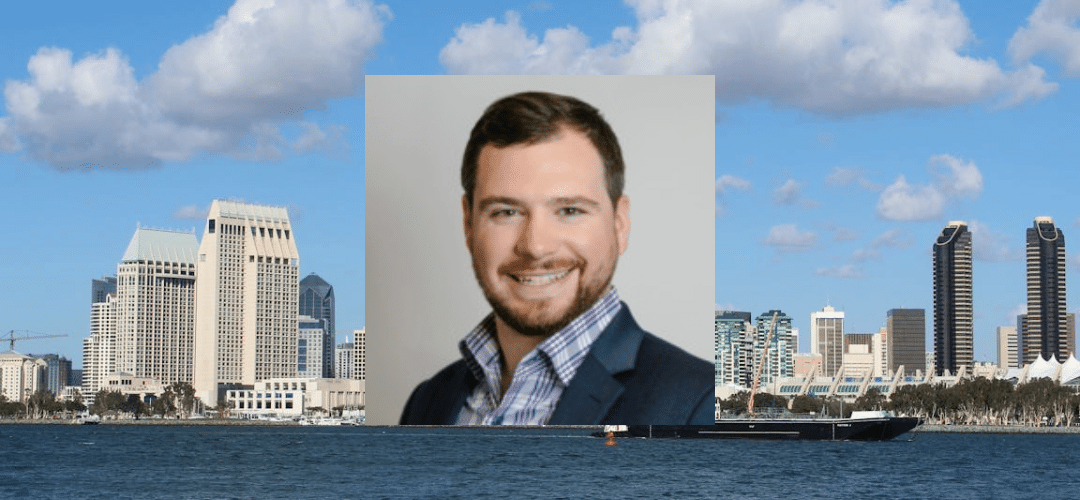
Welcome to our Coffee Chat series, where we get to know the “Logicians” who make Logic20/20 a great place to work. Today, we’re sitting down with Tim Frerichs, a Senior Manager based in San Diego, California. Grab your favorite beverage, pull up a chair, and join us!
Please tell us a bit about your journey to Logic20/20.
I started my career in consulting right out of undergrad at a Big 4 firm in Washington, D.C. I spent seven years there, first on the federal side and later in commercial utilities after relocating to San Diego.
Over time, my focus narrowed to AI and machine learning, especially in the utilities space. I helped lead an image analytics program for a major utility. It was one of the most innovative programs in the country at the time, and it pushed the boundaries of computer vision in that industry. The work was complex and highly visible, with real operational impact.
After several years, I was ready for something different. Logic20/20 reached out at the right moment. The AI and Analytics practice was growing, the work aligned closely with what I had been doing, and the chance to step into a role where I could make a measurable impact stood out. I joined in early 2025 and have been here just about a year.
What motivated you to leave the Big 4 firm?
At a certain scale, strong performance can start to feel abstract. You can deliver significant work, even open major opportunities, yet still feel like a small part of a very large machine.
I wanted a clearer line of sight between effort and outcome. At Logic20/20, when you help open an account or shape a program, you can trace the ripple effects. You see the impact on the client and the growth of the practice. It’s clear your work matters beyond your immediate project.
There’s also a difference in recognition. Here, if you build something meaningful, it doesn’t disappear into a reporting structure. It’s visible.
What drew you specifically to the AI and Analytics team?
The work itself. AI in the utilities space isn’t theoretical or confined to a slide deck. It involves applying machine learning models to infrastructure, field imagery, and operational decision-making. When a model flags a potential equipment issue before it becomes a failure, the utility can intervene early, preventing outages that affect entire communities.
The AI and Analytics team at Logic20/20 offered the chance to keep working at that level while also helping shape the direction of the practice. I could bring experience from large-scale programs and apply it in a setting where growth and strategy are still being defined, and where I could help shape both.
How has your experience at Logic compared to your expectations?
It’s been even more hands-on and more visible than I expected. There’s real autonomy here. If you see an opportunity, you’re encouraged to go after it. If a client needs a different approach, you have the backing to have that conversation. At the same time, you’re supported by experienced colleagues who are invested in the outcome.
What stands out most is the visibility. In delivery, you see the results for the client. On the sales side, the business impact is just as clear. That clarity changes the way you approach your work.
Your role seems to span a lot of areas. What does a “typical” day look like?
There’s no standard template for my day. My time is split between delivery oversight, pre-sales discussions, account strategy, and internal initiatives within the AI and Analytics practice. One morning might involve reviewing model performance or discussing an image analytics pipeline. Another might center on shaping a proposal or refining an approach for a new client conversation.
I prefer that variety. I’d rather be busy than bored, and the mix of responsibilities keeps the work interesting.
Looking back on your first year, what are you most proud of?
Opening a new utility account in the Midwest stands out. It was an account I had tried to break into before joining Logic20/20. This time, we approached it differently. We focused on understanding the client’s constraints and goals, not just responding to a request.
There was a moment where we could have simply said “yes” and moved forward. Instead, we stepped back and focused on what would genuinely move the needle for them. That decision deepened the partnership. The client returned with a revised scope, and we delivered a strong first project that positioned us for longer-term work.
Today, that initial engagement has evolved into discussions about a broader, multi-year program. For me, that’s what stands out about Logic20/20. We’re not chasing short-term wins. We focus on building something that lasts, and we follow through.
Which of Logic20/20’s values resonates with you most: “Drive toward excellence,” “Act with integrity,” or “Foster a culture of ‘we?'”
They really show up together. You can’t drive toward excellence without support, and support doesn’t mean much without integrity. I see that interplay regularly, especially in client engagements.
In the Midwest utility example, transparency came first. Once we aligned on the right scope, the team pushed to deliver work we were proud of. That combination builds long-term credibility, both externally and internally.
What would you say to someone at a large consulting firm who is considering a move to Logic?
If you’re curious, have the conversation. Large firms offer brand recognition and scale. Logic20/20 offers ownership. You still work on sophisticated programs with experienced consultants, many of whom came from large consulting firms. But you have more room to shape accounts and influence direction. You can actually see the outcomes of your efforts.
If you want your work to have visible impact and your voice to carry weight, this is the kind of environment where that can happen.
What do you enjoy doing in San Diego when you’re not working?
San Diego makes it easy to stay active year-round. I spend time playing pickleball and golf, visiting new wineries, and travelling when I can: skiing is next on the calendar.
And finally, how do you take your coffee?
Black, usually as a double shot of espresso.
I recently invested in a high-end grinder and a manual espresso maker, the kind where you pack the grounds and pull the lever yourself. With a full calendar and a lot of moving parts, that small ritual helps me start the day focused and ready to go.