

Executive summary: Microsoft Copilot ROI depends on disciplined decisions about use case priorities, organizational capabilities, and measurable business outcomes. The Copilot Value Acceleration framework provides a practical approach for directing investment toward opportunities with meaningful business impact.
4-minute read
For organizations investing in Microsoft Copilot, adoption alone provides an incomplete picture of business value. Realizing a meaningful return begins with an assessment of each opportunity’s potential impact and ability to deliver measurable business outcomes. These criteria help leaders prioritize use cases and allocate Copilot investment accordingly.
Improving Microsoft Copilot ROI also depends on the organization’s ability to support increasingly sophisticated use cases. Workforce capabilities and governance provide the foundation for pursuing opportunities at greater scale and complexity, while value measurement informs ongoing investment decisions.
Logic20/20’s Copilot Value Acceleration framework brings these elements together, providing a practical approach for increasing the business value of Copilot across the enterprise.
Infographic: A framework for accelerating Copilot value realization

Prioritization requires more than a list of use cases
Copilot can support use cases ranging from individual productivity improvements to AI-enabled business processes and agents. With such a broad field of possibilities, organizations need a practical basis for comparing competing opportunities.
Comparing opportunities across multiple dimensions helps leaders distinguish promising ideas from worthwhile investments. Financial and operational impact should be considered alongside implementation feasibility, data readiness, risk, and the organizational effort required to support adoption. Reach provides another useful dimension: an incremental improvement used by thousands of employees may warrant investment alongside a more targeted use case with substantial impact on a critical process.
The resulting prioritized portfolio will rarely consist of one type of initiative. Individual productivity improvements, process-level use cases, and AI agents each present different levels of complexity, risk, and organizational effort. Evaluating them within a common framework gives decision-makers a clearer view of the tradeoffs among competing investment opportunities.
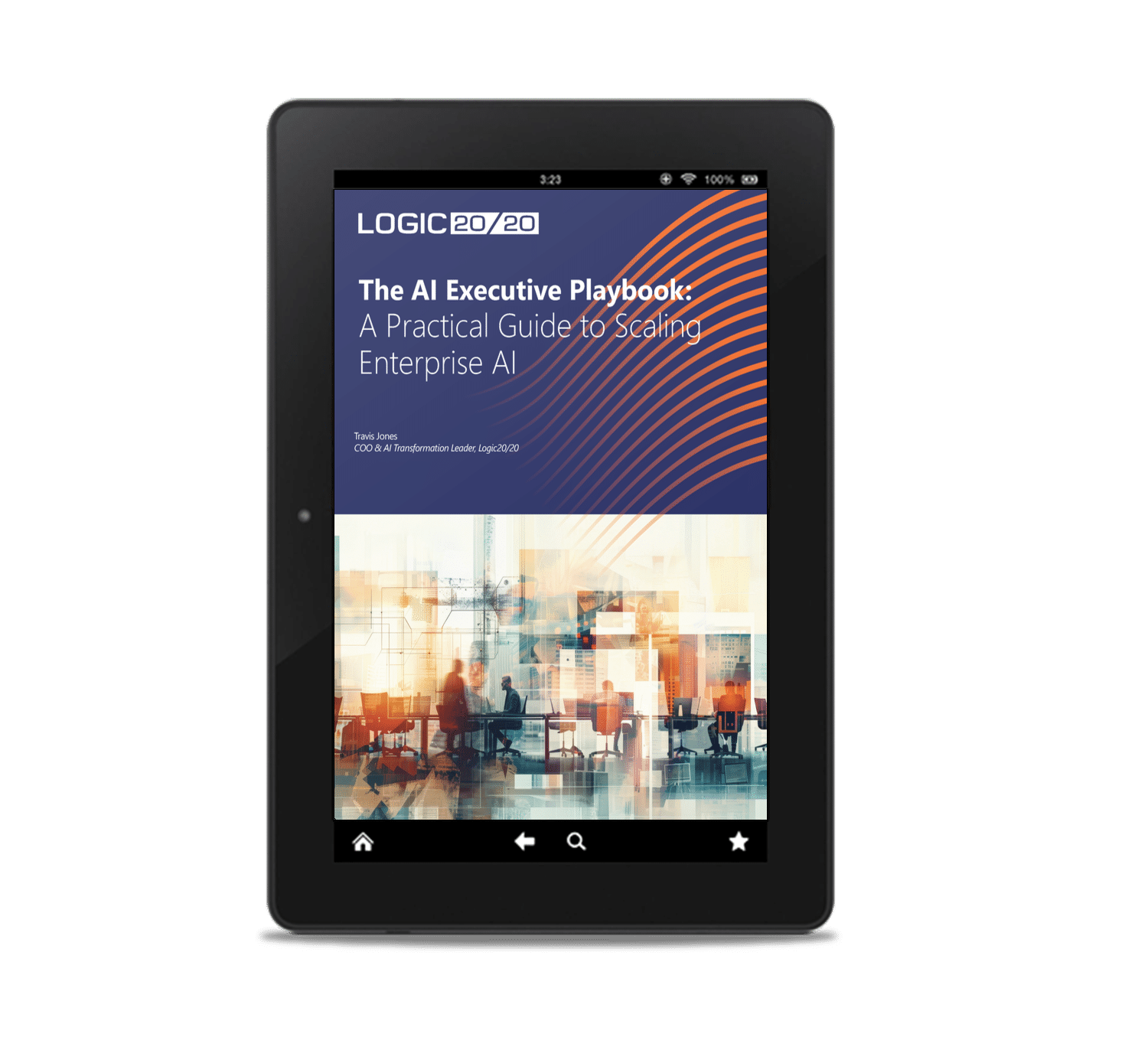
Scaling AI across the enterprise takes more than deploying new tools.
Our AI Executive Playbook offers practical guidance for establishing the governance, operating models, and organizational capabilities that support lasting adoption.
We will never sell your data. View our privacy policy here.
Build capabilities to match the opportunity
As Copilot initiatives become more complex, the organizational capabilities behind them need to evolve as well. Individual productivity use cases may depend primarily on employee proficiency and access to relevant information. Process-level use cases can introduce additional requirements for data quality, workflow integration, security, and accountability. AI agents raise further considerations as they take on greater autonomy within business processes.
A low-risk productivity use case does not necessarily require the same governance, technical controls, or change support as an agent operating within a critical business process. Matching those capabilities to the requirements of each use case can provide appropriate safeguards without creating unnecessary barriers to experimentation.
Over time, experience with less complex use cases also informs the capabilities needed for more ambitious initiatives. Lessons learned about data, employee behavior, governance, and operational integration give organizations practical evidence for strengthening their AI operating model as the portfolio matures.
Build a strong foundation for Copilot value
We help organizations align AI strategy, governance, workforce capabilities, and technology with high-value business opportunities.
Measure value through business outcomes
Establishing a baseline before deployment gives leaders a reference point for evaluating realized value. The appropriate measures will vary by use case: individual productivity use cases may track hours returned to employees, while process-focused use cases may track cycle times, costs, error rates, service quality, or other operational measures.
Measurement also provides evidence for decisions about the future of each use case. Meaningful gains may support broader deployment, while results that fall short of expectations may point to opportunities for refinement or a shift in resources.
Applied consistently across the portfolio, this feedback loop creates a clearer picture of Copilot’s contribution to business performance. It also helps leaders direct future investment toward use cases with demonstrated value.

Prepare your workforce for AI at scale
Learn how workforce enablement helps organizations accelerate AI adoption, support responsible use, and realize measurable value from their investments.
Keep Copilot investment aligned with value
The highest-value Copilot opportunities will change as business priorities shift, AI capabilities advance, and organizations gain practical experience. The use case portfolio should evolve accordingly, informed by demonstrated outcomes and emerging opportunities.
This perspective moves the focus beyond individual deployments toward sustained value creation. As the Copilot portfolio evolves, evidence from real-world performance gives leaders a clearer basis for expanding high-value use cases, redirecting resources, and pursuing new opportunities.
Ready to get more from your Copilot investment?
Logic20/20 can help you prioritize opportunities, strengthen the capabilities needed to support them, and establish a foundation for sustained Copilot value.
Learn more about AI in utilities