

Executive summary: Operational technology (OT) business integration coordinates the business and operational work required to prepare an OT system for launch. By maintaining alignment across business processes, change management, readiness activities, testing, and cutover planning, program teams can manage dependencies that may otherwise affect schedules, costs, and other critical implementation commitments.
5-minute read
Utilities face mounting pressure to modernize grid operations as electricity demand rises, infrastructure ages, electrification expands, and extreme weather and security threats increase operational complexity. U.S. electricity demand grew an average of 2.1 percent annually over the past five years, according to the U.S. Energy Information Administration, with continued growth projected through 2050. At the same time, utilities must manage aging infrastructure while adapting to changing generation resources, regulatory requirements, and customer needs.
In response, many utilities are investing in operational capabilities that provide greater situational awareness, automation, forecasting, outage response, and control. Depending on each utility’s operational needs, those investments may include energy management systems (EMS), advanced distribution management systems (ADMS), outage management systems (OMS), distributed energy resource management systems (DERMS), and related OT platforms.
Implementing an OT system creates dependencies across teams, vendors, processes, and technologies. Changes to system requirements may affect control center workflows, roles, system configuration, training, testing, and cutover planning, with responsibility for related activities distributed across multiple teams.
For program leaders, the stakes extend beyond system and operator readiness. Delays or unresolved implementation issues may affect budgets, regulatory or funding commitments, launch schedules, and the utility’s ability to deploy capabilities tied to strategic priorities.
OT business integration provides a framework for coordinating the business and operational work required to prepare an OT system for launch. It helps program teams maintain alignment across business processes, change management, readiness activities, testing, and cutover planning as system requirements and implementation decisions evolve.
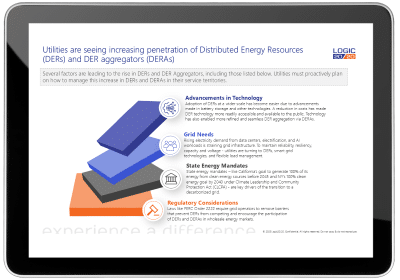
Webinar: Grid-edge DERMS: Orchestrating behind-the-meter assets for utility resilience and modernization
Explore grid-edge DERMS strategies for integrating distributed resources, strengthening operational readiness, and supporting a more flexible, resilient grid.
We will never sell your data. View our privacy policy here.
Why gaps emerge between workstreams
A business process change may affect system configuration, overall readiness, testing, cutover, or post-go-live while ownership of each activity remains distributed across different teams. As operating requirements evolve, unresolved dependencies may persist even when individual teams have completed their work.
While technical integration enables systems to exchange data and function together as intended, business integration coordinates the business and operational activities required to prepare the organization for system deployment.

The IT/OT PMO: Governance as the catalyst for utility modernization
Learn how a unified IT/OT PMO can strengthen governance, visibility, accountability, and risk management across complex utility modernization programs.
Coordinating the workstreams behind a DERMS launch
Consider a utility preparing to implement DERMS to manage distributed energy resources connected to the grid. As the project team defines the system’s use cases and translates them into requirements, multiple workstreams need to progress in coordination. Governance, business process design, change management, testing, and cutover planning each address a different aspect of system readiness, with dependencies among them that need to remain visible throughout the implementation.
Maintain clear ownership of cross-functional decisions
Governance provides a mechanism for resolving decisions that span organizational and vendor boundaries. For the example above, effective governance requires:
- Clear ownership of cross-functional decisions
- Accountability for the resulting actions
- Visibility into dependencies
A change in the system’s requirements may affect several teams at once. Through established governance processes, decision-makers identify the affected owners, track resulting actions, and escalate conflicting requirements or unresolved issues. Integrated schedules and risk and decision tracking also provide visibility into changes that affect multiple workstreams.
Is your OT implementation on track?
Discuss practical approaches for aligning business processes, workforce readiness, testing, and cutover activities across your implementation.
Align workforce readiness with operating reality
Changes in workflows or decision rights create new expectations for operators and other affected employees. Change management identifies the affected roles and prepares employees to perform their responsibilities under the future-state processes.
Training can then reflect the use cases and future-state workflows defined during the implementation. Business readiness reviews help teams identify gaps in role clarity, training, or support before employees assume new or changed responsibilities.
Validate the operating model through testing
Testing should connect system requirements to the use cases, business processes, and user actions they support. Acceptance criteria for each use case might address:
- The system response
- The user's actions
- Relevant handoffs
- Exception paths
- Expected outcomes
Coordination between technical testing and utility-led readiness and acceptance helps identify inconsistencies between system behavior and the intended operation before changes reach production. Traceability across requirements, test scenarios, defects, and readiness criteria also gives program leaders a clearer basis for acceptance and go/no-go decisions.
Coordinate readiness for go-live
During cutover, a new or changed operational system enters production. Runbooks and communications need to be established ahead of go-live to support a smooth system launch.
Dress rehearsals and go/no-go criteria expose gaps and validate readiness before launch, while a defined post-go-live support model defines support roles, escalation paths, and overall responsibility for issues that emerge during stabilization.

The DERMS journey: Keys to successful implementation
Learn how utilities can navigate DERMS implementation from vendor selection and system integration through change management and post-implementation operations.
OT business integration in practice: Coordinating DERs across portfolio operations
A recent DERMS engagement with a South Atlantic utility illustrates the scope of coordination required. The utility sought to integrate distributed energy resources (DERs) into its generation portfolio so storage and other flexible resources could participate alongside traditional generation assets.
Logic20/20 worked with the utility to define a DERMS control philosophy and future-state roadmap covering the operating model, decision logic, and phased implementation priorities. The work extended into operator workflows across five areas:
- Forecasting
- Optimization
- Scheduling
- Dispatch
- Monitoring
The engagement also required coordination across multiple vendors and systems, including energy trading tools, optimization engines, and the EMS, DERMS, and supervisory control and data acquisition (SCADA) systems. During development of the requirements specification, Logic20/20 coordinated end-to-end data flows and more than 100 system requirements across the utility and four vendors, then translated the requirements into the respective implementation statements of work (SOWs) and workstreams. The coordination helped align each vendor’s scope with the broader solution and targeted operating model.
Protect the outcomes that matter at the executive level
For program executives, successful OT delivery ultimately depends on meeting critical deadlines, controlling costs, satisfying regulatory or funding commitments, and deploying technology that supports the utility’s strategic goals.
Dependencies across implementation workstreams may sit below the level of executive oversight, but their consequences do not. Unresolved issues across business processes, system requirements, change management, testing, or cutover can create delays, increase costs, or put critical commitments at risk. Effective business integration gives the teams responsible for delivery a structured way to manage those dependencies before they affect program outcomes.
Logic20/20’s OT Business Integrator solution supports utilities in coordinating the business and operational work required for system readiness, helping program teams maintain alignment as they move toward go-live.
Prepare your OT program for a successful launch
Complex OT implementations depend on coordinated business processes, workforce readiness, testing, and cutover planning. Our utility specialists help program teams manage dependencies across these workstreams as they prepare for go-live.
Learn more about DERMS and OT business integration
DERMS: Essential implementation strategies for utilities
Learn how utilities can coordinate governance, business processes, system integration, testing, change management, and cutover across the DERMS implementation lifecycle.

Coordinating grid-centric and grid-edge DERMS
Explore how utilities can coordinate DERMS capabilities as distributed resources grow and operational complexity expands across the grid.

Operationalizing Distribution System Operator capabilities
Find out how governance, decision rights, stakeholder coordination, and change management help utilities translate new grid capabilities into day-to-day operations.

Ross Mesnick is a Senior Consultant in Logic20/20’s Grid Operations practice. With professional experience advising clients in the power & utilities sector, Ross has worked with major utilities across the United States to implement new technologies to transform the power grid. He has experience supporting utilities through the end-to-end system implementation process, including requirements gathering & development, vendor selection, business process design, testing, go-live & post-implementation support for ADMS, OMS, SCADA, and DERMS.

Robin Hackett is a Senior Manager at Logic20/20 with more than 15 years of experience leading large-scale analytics and technology programs across federal, financial, and utility sectors. She specializes in data engineering, data science, and business intelligence, helping organizations turn complex data ecosystems into actionable insights that drive strategic decisions. Robin is a certified Project Management Professional (PMP) with deep expertise in Agile delivery, product management, and program governance for mission-critical IT initiatives.