

Executive summary: Utilities are reevaluating vegetation management strategies as wildfire exposure, operational complexity, and regulatory pressure increase across transmission and distribution networks. This article examines the growing importance of territory-wide vegetation visibility and explores scalable approaches that support risk-based prioritization, mitigation planning, and vegetation analysis across large service territories.
7-minute read
Risk-based vegetation management depends on visibility.
The relationship seems straightforward, but it becomes more difficult to maintain as utilities move beyond fixed inspection and trimming cycles. The more organizations rely on risk models to prioritize work, the more important it becomes to understand vegetation conditions across the entire network, not just the areas that were recently inspected.
Many utilities have made significant progress in developing risk-based programs. The question is whether they have the visibility needed to support them.
Table of contents (click to expand)
- How incomplete vegetation visibility affects operational decisions
- Establishing the data foundation for risk-based vegetation management
- Building a vegetation baseline at service-territory scale
- Operational implications of a consistent vegetation baseline
- Accelerating vegetation baseline development
- The next phase of vegetation management depends on visibility
How incomplete vegetation visibility affects operational decisions
Most utilities already collect large volumes of vegetation-related data through inspections, patrols, trimming activity, and post-event response work. Most vegetation data enters utility environments through workflows designed for field execution and maintenance tracking rather than system-wide vegetation analysis.
Existing collection methods produce uneven coverage
Inspection-driven collection methods continue to produce incomplete coverage across the service territory. Coverage depends heavily on prior maintenance activity, accessibility, staffing levels, regional operating practices, and established inspection schedules.
Vegetation programs also rely heavily on work order history to estimate exposure and prioritize mitigation activity. Work history primarily captures completed trimming activity and prior field operations rather than current vegetation exposure trends.
Regulatory requirements reinforce these collection patterns. Utilities often operate under time-based patrol and maintenance programs designed to support compliance and operational oversight. These structures do not always align with current exposure conditions.
As utilities shift toward risk-based vegetation management, many are supplementing scheduled field activity with broader, continuously updated visibility into vegetation conditions and asset proximity.
Visibility gaps affect operational prioritization
Comparing vegetation exposure consistently across circuits, operating regions, and asset classes remains difficult for many utilities. Potential impacts include:
- Inspection schedules driven by historical maintenance patterns rather than current exposure conditions
- Uneven trimming activity across operating regions
- Resource allocation based on incomplete observations
- Risk scores that reflect observation density more than actual exposure conditions

How image analytics is reshaping inspections, reliability, and asset visibility
Utilities are using image data from drones, satellites, and LiDAR to expand inspection coverage and prioritize decisions with consistent visual data. Our experts outline strategies for structuring and deploying these capabilities across the enterprise.
We will never sell your data. View our privacy policy here.
Building the data foundation for risk-based vegetation management
Risk-based vegetation management depends on a current and consistent representation of vegetation conditions across the service territory. Most inspection-driven collection methods were designed to support field execution and maintenance activity rather than territory-wide vegetation measurement.
Establishing a baseline requires broader coverage and standardized measurement
Vegetation location, density, asset proximity, and surrounding environmental conditions require consistent measurements across operating regions.
Scalability also becomes important across large service territories. Relying on field-based inventory efforts alone makes it difficult to establish broad, consistent vegetation coverage across the network. Geospatial analysis helps utilities build a more complete baseline for vegetation analysis and prioritization.
Vegetation visibility is becoming a foundational capability
Current analytical investments are prompting reassessment across vegetation programs. Many organizations are recognizing that analytical tools work better when they operate on complete, current, and consistently generated vegetation data.
This shift changes the order of investment decisions. Rather than treating vegetation data as a byproduct of inspection activity, utilities are beginning to treat network-wide vegetation visibility as essential infrastructure for risk-based vegetation management.
How utilities are modernizing vegetation management with AI and data
Learn how utilities are using AI, imagery, and scalable analytics to improve vegetation visibility and prioritize mitigation activity across the grid.
Creating a vegetation baseline at service-territory scale
More utilities are adopting methods designed for broad vegetation visibility instead of inspection-driven sampling.
Satellite imagery expands coverage beyond inspection cycles
One emerging method uses high-resolution satellite imagery to map vegetation conditions across the entire service territory. Coverage across transmission and distribution environments no longer depends entirely on incremental inspection cycles.
Publicly available imagery sources are making these capabilities more accessible. Programs such as the National Agriculture Imagery Program (NAIP) provide high-resolution aerial imagery across the United States, reducing the cost and complexity of establishing vegetation coverage across large service territories.
Vegetation data must support operational workflows
Newer vegetation analysis approaches use computer vision and geospatial processing techniques to identify individual trees, estimate vegetation density, and measure proximity to utility infrastructure. Applying the same detection methodology produces a more consistent dataset than regionally fragmented inspection practices or contractor-specific collection methods. Using the same processing methodology keeps vegetation exposure data comparable across circuits, districts, and operating regions.
See how machine learning improves power corridor visibility
Explore how machine learning models help utilities identify vegetation exposure risks more efficiently across transmission and distribution corridors.
Operational usability matters as much as analytical performance
Many emerging approaches now generate GIS-ready outputs that integrate with utility platforms already used for vegetation management, wildfire mitigation, inspection planning, and risk analysis. Vegetation datasets can integrate into existing workflows without requiring separate processes.
Timeline becomes another advantage. Some approaches can generate baseline tree inventories across large service territories in weeks instead of relying on multi-year field cataloging efforts.
Building scalable image analytics foundations for utility operations
Discover how utilities are creating standardized imagery and data foundations to support operational analytics and infrastructure visibility at scale.
Operational implications of a consistent vegetation baseline
Risk models become easier to validate
Standardized vegetation measurements across operating regions make circuit exposure easier to evaluate. The improvement also supports regulatory and governance activities. More consistent vegetation records can strengthen support for wildfire mitigation plans, regulatory filings, and internal audits.
Inspection and trimming activity become more precise
A complete vegetation baseline supports prioritized inspection and mitigation efforts across the service territory. Field activity can align more closely with vegetation proximity to utility assets, encroachment thresholds, and circuit-level exposure conditions. Outcomes include:
- Reduced trimming activity in lower-exposure areas
- Faster identification of spans with elevated encroachment risk
- More focused deployment of inspection crews and contractors
- Mitigation activity that reflects actual vegetation conditions
Maintenance and capital planning become more focused
Maintenance activity and infrastructure investment can align more directly with measured exposure conditions instead of broad distribution targets or historical maintenance patterns.
See what territory-wide vegetation visibility looks like in practice
Explore how TreeVision supports vegetation exposure analysis, inspection planning, and mitigation prioritization using GIS-ready datasets generated from publicly available imagery.
Accelerating vegetation baseline development
Some utilities are beginning to build vegetation baselines through large-scale geospatial analysis instead of relying primarily on incremental field inventory creation.
Logic20/20’s TreeVision accelerator is one example of that shift. The platform uses publicly available National Agriculture Imagery Program (NAIP) imagery together with Microsoft Azure processing infrastructure to generate vegetation datasets across large utility service territories.
Tree-level analysis using scalable geospatial methods
TreeVision uses computer vision and geospatial analysis to identify individual trees, estimate vegetation density, and measure proximity to utility infrastructure for exposure analysis and prioritization.
Because the platform applies the same methodology across the full service territory, utilities gain more uniform measurements across operating regions and asset environments.
Microsoft Azure supports large-scale processing across transmission and distribution systems without requiring utilities to build comparable infrastructure internally.

TreeVision outputs include tree polygons, proximity indicators, and summary metrics delivered as versioned GIS layers.
Designed to integrate with existing utility workflows
TreeVision generates GIS-ready outputs that integrate into existing planning systems, vegetation management platforms, and analytical workflows. The resulting datasets support inspection planning, mitigation prioritization, and broader vegetation exposure analysis without requiring separate processes. Utilities also retain direct ownership of the resulting vegetation datasets instead of relying exclusively on externally managed platforms.
The approach shortens the timeline and reduces the effort needed to establish a baseline vegetation inventory. Utilities can generate comprehensive inventories across large service areas in weeks instead of relying on multi-year field cataloging efforts, reducing dependence on field-intensive inventory development for establishing baseline coverage.
Because TreeVision uses publicly available National Agriculture Imagery Program (NAIP) imagery, utilities also avoid much of the cost tied to repeated large-scale aerial collection and network-wide vegetation analysis.
Supporting the broader vegetation management ecosystem
TreeVision functions as a core vegetation data layer that utilities can use alongside existing vegetation management and wildfire mitigation tools. Risk models and prioritization workflows become more useful once utilities establish a system-level vegetation baseline.
The next phase of vegetation management depends on visibility
Utilities are increasingly focused on maintaining a current view of vegetation exposure across large, continuously changing infrastructure environments.
The utilities making the most progress in this transition are not always the ones making the largest investments in advanced analytics. In many cases, they are the utilities improving the underlying data foundation that supports those capabilities through broader vegetation coverage, standardized measurement practices, and scalable methods for maintaining baseline data across the service territory.
Risk-based vegetation management is evolving from a cyclical inspection program into a continuously updated monitoring and prioritization capability. Maintaining a current, consistent view of vegetation conditions across the grid will help utilities prioritize mitigation activity, support field and planning decisions, and respond more quickly to changing wildfire and reliability conditions.
Evaluate your vegetation visibility strategy
Risk-based vegetation management depends on current, consistent visibility into vegetation conditions across the service territory. Logic20/20 helps utilities assess vegetation data coverage, operational workflows, and scalable baseline-generation approaches that support prioritization, planning, and wildfire mitigation programs.
Learn more about vegetation visibility
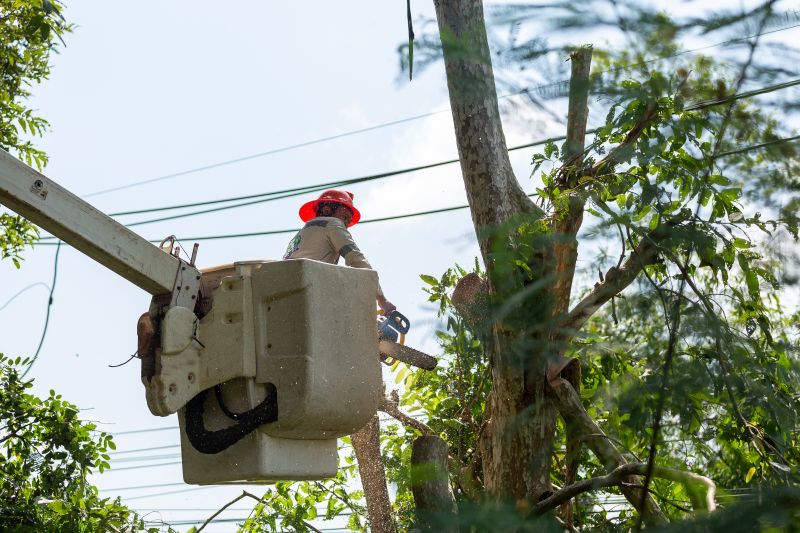
Vegetation management solutions
Scalable approaches to modernizing vegetation management through analytics, visibility, and operational prioritization
Transforming utility operations with asset image analytics
How image analytics and geospatial data help utilities improve inspection workflows, operational awareness, and infrastructure management

Crafting a robust business case for drone image analytics
How we helped a utility evaluate the operational and financial value of drone and image analytics programs before large-scale deployment